
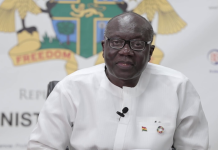











The Institute for Economic Research and Public Policy (IERPP) has called on the Government of Ghana to provide greater transparency and accountability following the presentation of the 2026 Mid-Year Budget Review to Parliament by the Finance Minister on July 23.
While acknowledging improvements in key macroeconomic indicators—including lower inflation, a relatively stable cedi, and an improved debt-to-GDP ratio—the Institute argues that the review presents only part of the country’s fiscal reality.
According to IERPP, a credible mid-year budget assessment should not only highlight economic achievements but also explain the figures behind those gains and address unresolved fiscal concerns.
One of the Institute’s major concerns is the absence of progress reports on two flagship government initiatives—the 24-hour economy and Nkonko-Nkitinkiti programme.
IERPP noted that the 24-hour economy initiative received GH¢110 million in the 2026 budget but the Mid-Year Review failed to disclose how many jobs have been created, how many people are employed under the programme, or which companies are participating.
Similarly, the Institute questioned the lack of information on the GH¢245 million allocated to the Nkonko-Nkitinkiti poultry programme, which was introduced to boost local poultry production, create jobs and reduce imports.
According to IERPP, the absence of updates leaves Ghanaians without a clear understanding of whether these flagship programmes are achieving their intended objectives.
Although the review states that the country’s debt-to-GDP ratio declined from 61.8 percent at the end of 2024 to 45 percent by June 2026, IERPP argues that this ratio alone does not accurately reflect the country’s debt burden.
Citing Bank of Ghana data, the Institute said total public debt increased from GH¢663.4 billion in January 2026 to GH¢720.8 billion by May 2026, suggesting that the overall debt stock has remained significantly high despite improvements in the debt ratio.
IERPP therefore urged government to publish both the debt-to-GDP ratio and the total debt stock in cedis and dollars to provide a complete picture of Ghana’s fiscal position.
The Institute further questioned the omission of a recently approved loan facility of approximately US$1 billion from the Mid-Year Budget Review.
It argued that Parliament and the public deserve a full explanation of the facility, including its purpose, repayment terms and how it fits into Ghana’s broader debt management strategy.
IERPP also raised concerns about the financing of the Free Senior High School (Free SHS) programme.
Although government maintains that Free SHS is funded entirely from domestic resources, the Institute pointed to the US$300 million World Bank/IDA education facility supporting school infrastructure.
IERPP said Ghanaians deserve clarity on whether the longstanding commitment that Free SHS would not rely on external borrowing still holds.
The Institute questioned government’s disclosure that the Contingency Fund had been frozen by an Accra High Court garnishee order, forcing authorities to reallocate GH¢350 million from the Contingency Vote for flood relief.
IERPP argued that the review failed to explain the legal liability behind the court order and called for government to publicly disclose the circumstances surrounding the frozen emergency fund.
The Institute also expressed concern that while government announced plans for a permanent flood solution, implementation has been postponed until the 2027 Budget, leaving affected communities without a long-term intervention ahead of another rainy season.
IERPP further noted that the Mid-Year Review acknowledged persistent liabilities accumulated by State-Owned Enterprises (SOEs) and referenced the GH¢5 billion bond issued to recapitalise the Bank of Ghana.
However, the Institute said the review failed to disclose the total value of SOE liabilities and the central bank’s full capital position, limiting Parliament’s ability to assess the country’s complete fiscal outlook.
metrotvonline