














The recent decision by the Bank of Ghana (BoG) to suspend a proposed 0.75% fee on direct wallet-to-bank transfers has ignited a crucial national conversation about the pricing of digital payments. At the heart of this debate is a stark warning from consumer protection advocates: as mobile money evolves into the backbone of Ghana’s economy, any adjustments to its fee structure must be handled with extreme care.
CUTS International, a respected public policy think tank, has welcomed the BoG’s decisive intervention but is urging sustained vigilance. According to the organization, mobile money—particularly MTN Mobile Money (MoMo)—has outgrown its original status as a simple convenience tool. Today, it is a core pillar of Ghana’s financial inclusion strategy.
For millions of Ghanaians, MoMo is no longer just an alternative payment method; it is the primary gateway for saving, transferring, and receiving money. Because of this deep integration into daily economic activity, the think tank warns that even marginal changes in pricing can trigger cascading effects on households, micro-businesses, and the broader financial ecosystem.
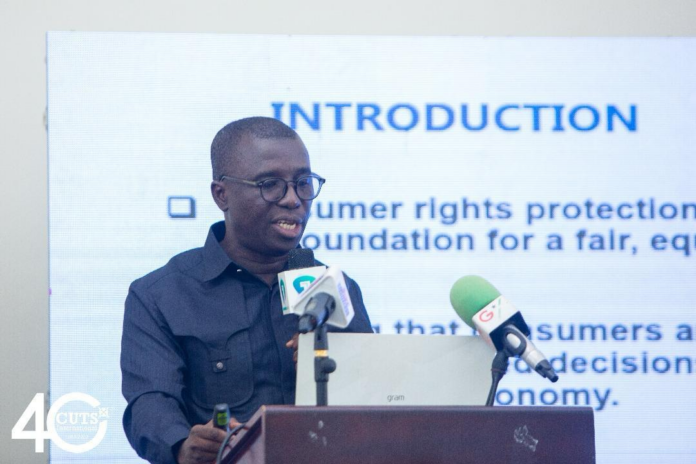
The Danger of Eroding Financial Inclusion Appiah Kusi Adomako, the West Africa Regional Director of CUTS International, emphasized that the sheer scale of MoMo’s adoption means pricing decisions are now matters of public interest.
“Mobile money has come to stay. It is central to our financial inclusion story and the daily lives of millions of Ghanaians,” he noted.
The concern is particularly acute for low-income users and those in rural areas. Financial inclusion has largely been driven by small-value, high-frequency transactions. Consumer advocates warn that introducing new charges—no matter how small they appear on paper—could effectively price out the most vulnerable populations, undoing years of hard-won progress in bringing the unbanked into the formal financial system.
A Call for Meaningful Stakeholder Engagement To prevent commercial pricing from undermining social welfare, CUTS International is calling on MTN Mobile Financial Services Limited (MMFL) to abandon any notion of unilateral fee adjustments.
Instead, the organization is demanding a highly transparent, consultative approach. Adomako stressed that MMFL must actively engage not just with regulators like the BoG, but also with consumer advocacy groups and the general public before rolling out any future pricing models.
“Any changes to its fee structure must therefore be handled with the utmost care, transparency, and respect for the consumer,” Adomako stated. “We call on MMFL to engage meaningfully with regulators, consumer advocates, and the public during the consultation period to arrive at a fair and sustainable outcome.”
The overarching goal, according to CUTS, is to ensure that pricing decisions strike a delicate balance: they must be commercially sustainable for the telecom operators, but equally, they must remain socially fair to the citizens who rely on the service.
The Bigger Economic Picture The ongoing debate highlights just how rapidly Ghana’s digital landscape is maturing. Driven by increased digital adoption, the rise of merchant payments, and growing interoperability between traditional bank accounts and mobile wallets, the volume of digital transactions is breaking new records.
This digital mesh has yielded massive macroeconomic benefits. It has drastically reduced physical congestion in traditional banking halls, lowered the overall cost of transactions, and extended financial services to the furthest reaches of the country.
However, as the line between telecommunications and formal banking continues to blur, the suspension of the 0.75% fee serves as a critical reminder: as MoMo’s role in the financial sector deepens, the rules governing it must prioritize the protection of the everyday user above all else.