









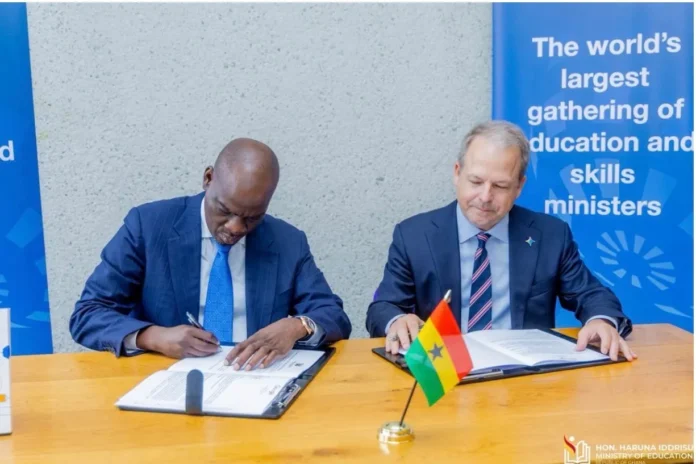

In a bold move to future-proof its educational system, the Government of Ghana has entered into a strategic partnership with global tech giant Google. The Ministry of Education has officially signed a landmark Memorandum of Understanding (MoU) with Google for Education, paving the way for the widespread integration of Artificial Intelligence (AI) technologies into teaching and learning across the country.
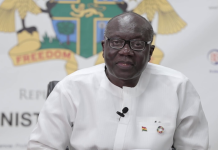
The historic agreement was formalized by the Minister for Education and Member of Parliament for Tamale South, Haruna Iddrisu, and Google for Education’s Global Managing Director, Kelvin Kells. This collaboration signals a definitive shift in Ghana’s educational strategy, moving to anchor its curriculum in the rapidly advancing digital economy.
Transforming the Classroom Experience At the core of the MoU is a comprehensive plan to modernize the Ghanaian classroom. The partnership is structured to deliver several critical outcomes: a nationwide boost in digital literacy, targeted capacity-building programs to equip teachers with modern tech skills, and the introduction of AI-driven innovation in lesson delivery.
By embedding these tools into the daily learning experience, the initiative aims to arm Ghanaian students with the essential 21st-century skills required to remain competitive on a global scale.
A ‘Transformative Milestone’ Speaking at the signing ceremony, Minister Haruna Iddrisu described the collaboration as a watershed moment for the country’s education sector. He noted that the agreement perfectly aligns with the government’s aggressive agenda to leverage technology, foster innovation, and cultivate strategic global alliances to elevate educational outcomes.
For the Education Minister, the ultimate goal of the partnership is practical and forward-looking: to adequately prepare Ghanaian learners for the evolving landscape of the future of work, ensuring their skills remain relevant in a technology-dominated global market.
Positioning Ghana as a Forward-Looking Nation Beyond the immediate impact on schools and teachers, the MoU carries significant macroeconomic implications. By actively seeking to harness the power of AI and digital transformation, Ghana is reinforcing its image as a forward-looking nation on the African continent.
The government views this partnership as a vital step toward building an education system that is not only highly competitive but also deeply inclusive. Ultimately, the integration of Google’s AI tools into the national framework underscores a broader, unwavering governmental vision: to guarantee that as the world transitions deeper into the digital age, no Ghanaian child is left behind.