

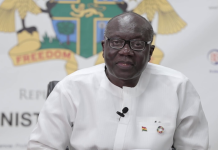













In recent public discourse on TV3, Ghanaian lawyer and policy advocate, Kofi Bentil, has advanced a provocative governance reform. According to him, government appointees should not be permitted to travel outside the country at the end of a regime until they have fully accounted for their stewardship in office. The proposal, while controversial, speaks to a growing demand for accountability, transparency, and ethical governance in Ghana and across many democracies.
There is therefore the need to examine the rationale behind the idea, its potential benefits, legal and practical challenges, and its broader implications for quality democratic governance. The Fourth Republic means so much to the ordinary Ghanaian that it must not fail.
Addressing Accountability Gaps
Bentil’s proposal is rooted in a widely shared public concern. Governance accountability mechanisms often appear inadequate, delayed, or selectively enforced. In many cases, allegations of corruption, financial mismanagement, or abuse of office surface only after officials leave office. By that time, some individuals have already left the country, complicating investigations, prosecutions, and asset recovery.
The idea of temporarily restricting travel serves as a preventive safeguard rather than a punitive measure. It aims to ensure that officials remain within the jurisdiction of national authorities long enough to provide detailed accounts of their actions, respond to audits, and cooperate with any necessary investigations. In theory, this would strengthen enforcement of public financial management laws and reduce the risk of impunity.
Importantly, the proposal resonates with broader global concerns about illicit financial flows and the difficulty of bringing politically exposed people to justice once they relocate abroad. In this sense, Bentil’s suggestion aligns with a wider international push for stricter oversight of public office holders.
Potential Benefits
The most compelling advantage of the proposal is its potential to reinforce accountability. A mandatory “accounting period” at the end of a government’s term could ensure that all appointees undergo structured audits and reviews of their performance. This could include financial audits, policy evaluations, and compliance checks. Such a system could enhance transparency by making the end-of-tenure process more formalised and visible to the public. Citizens would gain greater confidence that public officials are not above scrutiny.
Knowledge that one cannot simply leave the jurisdiction immediately after leaving office may act as a deterrent against corrupt behaviour. Officials may be less inclined to engage in misconduct if they know they will face immediate and unavoidable scrutiny at the end of their tenure. This could contribute to a cultural shift in public service, reinforcing the principle that public office is a position of trust rather than an avenue for personal enrichment.
In cases where wrongdoing is suspected, keeping individuals within the country simplifies investigative procedures and legal processes. Authorities would have easier access to people of interest, and there would be fewer legal hurdles compared to pursuing extradition across jurisdictions. This could also improve efforts to recover misappropriate state resources, which often become more complex when assets and individuals cross borders.
Legal and Constitutional Considerations
Despite its appeal, Bentil’s proposal raises significant legal questions. Chief among these is the right to freedom of movement, which is protected under Ghana’s Constitution and various international human rights instruments. Restricting an individual’s ability to travel temporarily would require a clear legal framework and strong justification.
To be constitutionally valid, such a measure would likely need to meet several criteria. It must be grounded in law, not merely executive discretion. It must address a legitimate public interest, such as preventing corruption or ensuring accountability. The restriction must be limited in scope and duration and applied in a way that balances individual rights with public interest.
A blanket restriction on all appointees could face legal challenges for being overly broad or punitive. A more defensible approach might involve targeted measures, such as requiring clearance certificates before travel or imposing restrictions only where there are reasonable grounds for suspicion.
Practical Challenges
One immediate question is who exactly would be subject to this rule. Would it apply only to ministers and deputy ministers, or extend to board members, CEOs of state-owned enterprises, and political aides? A broad definition could create administrative burdens, while a narrow one might undermine the policy’s effectiveness.
Implementing such a system would require robust institutional capacity. Auditing thousands of officials within a limited post-tenure period is a complex task. Ghana’s oversight institutions such as the Auditor-General’s Department and anti-corruption agencies need significant resources and enhancements to handle the increased workload.
Another concern is the potential for misuse. Travel restrictions could be weaponised against political opponents, particularly in highly polarised environments. Without strong safeguards and independent oversight, the policy could inadvertently become a tool for harassment or political vendettas. Ensuring that the system is transparent, rule-based, and insulated from partisan interference would be essential to maintaining its legitimacy.
Comparative Perspectives
While Bentil’s proposal may appear novel in the Ghanaian context, elements of it exist in other jurisdictions. For instance, some countries impose travel bans on individuals under investigation for corruption or financial crimes. Others require public officials to file detailed asset declarations before, during, and after their tenure.
However, a universal post-tenure travel restriction for all appointees is rare. Most systems rely on risk-based or case-specific measures rather than blanket rules. This suggests that while the underlying objective is widely shared, the proposed method would need careful adaptation to fit within democratic norms and legal constraints.
A Balanced Path Forward
Rather than adopting the proposal in its most rigid form, policymakers might consider a more nuanced approach that captures its benefits while mitigating its risks. Possible alternatives include all senior appointees to undergo audits before leaving office, with clear timelines. Introduce a requirement for official clearance before international travel within a defined post-tenure period. Enhance verification and enforcement of asset declarations to ensure consistency and transparency as well as apply travel restrictions only in cases where there is credible evidence of wrongdoing or ongoing investigations. Such measures would preserve the spirit of accountability while respecting constitutional rights and minimising the risk of abuse.
Kofi Bentil’s proposal has sparked an important and necessary conversation about accountability in Ghana’s governance system. Its core premise that public officials should be answerable for their conduct before existing the jurisdiction reflects a legitimate public demand for integrity and transparency. However, translating this idea into policy requires careful balancing. Legal safeguards, institutional capacity, and protections against misuse must all be addressed to ensure that the measure strengthens, rather than undermines, democratic governance.
Ultimately, the value of Bentil’s proposal lies not only in its specifics but in its challenge to the status quo. It compels Ghanaians to rethink how best to hold public officials accountable and how to build a system where service to the state is matched by clear, enforceable responsibility to its citizens. The Fourth Republic must not fail!