











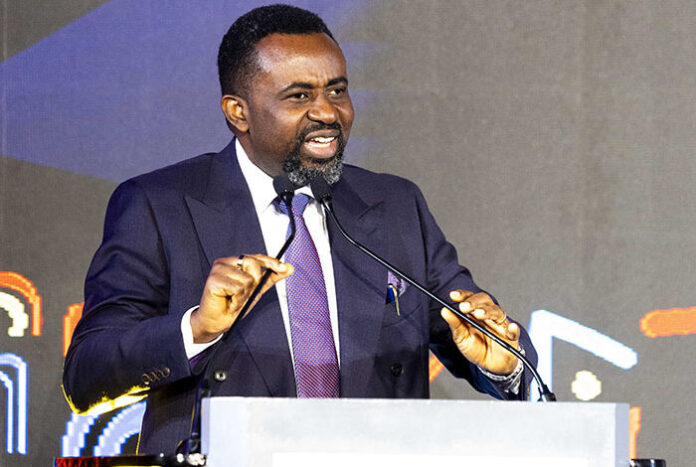

Addressing a room of potential backers at the Ghana-UK Investment Summit in London, Bank of Ghana Governor Dr. Johnson Pandit Asiama delivered a clear and urgent message to the international investment community: it is time to update the narrative on Ghana.
Dr. Asiama urged global investors to stop analyzing the country through the lens of the devastating 2022 economic crisis, arguing that the current economic reality is fundamentally different thanks to a raft of institutional reforms.
Closing the Chapter on 2022 The Governor acknowledged that the trauma of the 2022 economic meltdown and the painful Domestic Debt Exchange Programme (DDEX) left deep scars on investor confidence. However, he stressed that continuing to view Ghana through a “crisis-era filter” is a misreading of the present.
According to Dr. Asiama, both monetary and fiscal authorities have spent the intervening years aggressively rebuilding the country’s economic foundations. He pointed to landmark amendments to the Bank of Ghana Act as the ultimate proof of this transformation. The revised legislation places strict, legal limits on the central bank’s ability to finance government deficits—a primary culprit in the 2022 crash.
Because of these new fiscal rules and legal guardrails, the Governor warned that the policy missteps that triggered past instability are structurally impossible to repeat.
“We are building back better. What happened in the past belongs to the past,” Dr. Asiama declared, emphasizing that macroeconomic stability has been firmly restored and the country is primed for long-term capital.
The Middle East Speed Bump While confident in the domestic recovery, the Governor provided a candid assessment of external headwinds. He noted that the recent escalation of geopolitical tensions in the Middle East has acted as a temporary brake on Ghana’s declining interest rates.
The resulting global energy shocks have disrupted what had been a steady downward trajectory in borrowing costs. “But for the Middle East crisis, interest rates would probably have been below 10 percent by now,” Dr. Asiama revealed. He expressed strong optimism, however, that once these external pressures begin to ease, the downward trend in rates will swiftly resume.
A Vision for an Accra Financial Hub Looking beyond mere stability, the Governor outlined an ambitious vision for Ghana’s financial sector. He stated that the country is now leveraging its restored macroeconomic environment to drive a full-scale economic transformation, actively courting both domestic and foreign investment.
A key part of this strategy involves the Ghanaian diaspora in the UK. Dr. Asiama challenged them to move beyond remittances and become active investors, noting that diaspora capital often acts as a catalyst that attracts broader international funds.
Ultimately, the Governor painted a picture of Ghana not just as a recovering economy, but as an emerging heavyweight. Citing the country’s deep talent pool, growing capital base, and newly fortified institutional frameworks, Dr. Asiama revealed a long-term aspiration to establish an international financial services centre in Accra within the next few years, positioning the city as a leading financial hub on the African continent.