








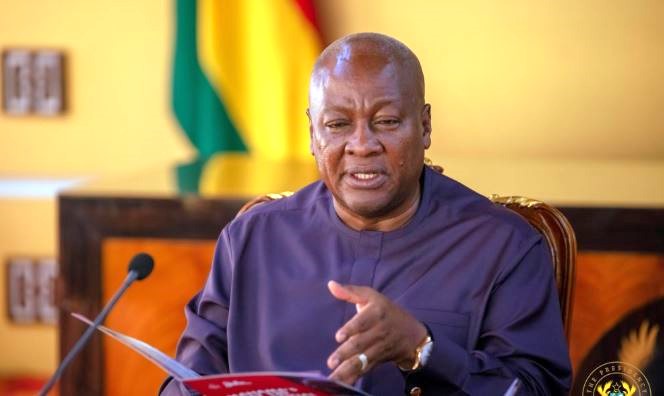

President John Dramani Mahama has delivered a sobering reality check on the prospect of government-sponsored World Cup travel for Ghanaian fans, citing an eye-watering $11,000 price tag per person as fundamentally unsustainable for the state.
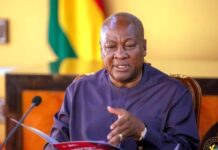
Speaking at a diaspora town hall meeting on Sunday, May 31, the President addressed the widespread anticipation surrounding the 2026 FIFA World Cup, which will be jointly hosted by the United States, Canada, and Mexico. However, he was quick to draw a line between national enthusiasm and fiscal responsibility.
According to President Mahama, initial logistical assessments have revealed that underwriting the full World Cup experience for fans flying out of Ghana comes with an exorbitant cost. When factoring in international airfare, accommodation, daily feeding, internal transportation in the host countries, and match tickets, the estimated bill comes to approximately $11,000 per individual.
“We cannot, you know, spend our money in that manner,” the President stated candidly, explaining that bankrolling a mass airlift of supporters is completely out of the question.
The President’s stance is deeply rooted in the government’s current macroeconomic trajectory. Having recently navigated the country out of a severe economic crisis and an IMF bailout program, the administration has placed a premium on strict fiscal discipline. President Mahama emphasized that committing massive chunks of public funds to subsidize a sports tourism jamboree would be a direct violation of the financial prudence the state is trying to project to both domestic citizens and international investors.
A Pragmatic Pivot to the Diaspora While the government has shut the door on flying fans from Accra, it has not entirely abandoned its support for Black Stars supporters. Instead, President Mahama announced a highly pragmatic alternative: leveraging the Ghanaian diaspora already situated in North America.
To ensure there is still a strong, visible Ghanaian presence in the stadiums, the government will pivot its resources toward procuring match tickets specifically for Ghanaians living in the diaspora who wish to attend the games in the host cities.
This strategic shift achieves two goals simultaneously. It guarantees that the national team will still feel the backing of its compatriots in the stands, but it completely eliminates the crippling costs of international flights and transatlantic accommodation, ensuring that public funds are utilized responsibly.
Ultimately, the President’s message underscores a new era of economic realism in Ghana, where national pride and sports fandom must be balanced against the harsh realities of the national purse.