












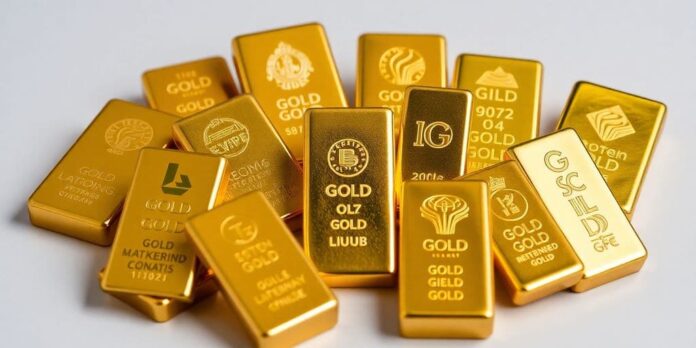

Gold prices surged past the $4,300 per ounce threshold on Monday, extending a three-day winning streak as a landmark preliminary peace agreement between the United States and Iran triggered a sharp drop in oil prices and cooled global inflation anxieties.
Spot gold climbed 2.72% to reach $4,336.74 per ounce, riding a wave of market optimism after Washington and Tehran announced a framework aimed at restoring stability to Middle East energy flows.
The geopolitical thaw centers on a highly anticipated deal expected to be formally signed in Switzerland on June 19. According to officials involved in the discussions, the agreement includes critical provisions for reopening the strategic Strait of Hormuz, lifting maritime blockades, providing sanctions relief for Iran, and initiating steps to dismantle Tehran’s nuclear program.
The Oil-Inflation Connection: The immediate market impact of the deal was most visible in the energy sector. With the threat of a major supply disruption effectively removed, Brent crude prices plummeted to a two-month low.
This sudden plunge in energy costs has significantly altered the global inflation calculus. For months, rising oil prices fueled by Middle East tensions had kept central banks on edge, stoking fears that interest rates would need to stay higher for longer. The peace deal has effectively short-circuited that narrative, drastically reducing near-term inflation expectations and easing the pressure on central bankers to implement further rate hikes.
Shifting Focus to Central Banks: With the immediate geopolitical panic subsiding, the gold market’s attention is rapidly pivoting to a heavy week of central bank policy decisions.
All eyes are on the US Federal Reserve, which is holding its first meeting under newly appointed Chair Kevin Warsh. Markets widely expect the Fed to maintain its current interest rate stance. Similarly, the Reserve Bank of Australia is anticipated to hold rates steady, while the Bank of Japan is reportedly weighing a potential rate increase to bolster its struggling currency.
The Bigger Picture for Bullion: While gold is traditionally viewed as a hedge against inflation and uncertainty, its current rally highlights the complex ways geopolitical shifts reverberate across financial markets. The metal is capitalizing on the broader market recalibration prompted by the peace deal.
Despite the robust three-day rally, the precious metal is still nursing a roughly 5% loss over the past month. However, its longer-term trajectory remains fiercely bullish; gold remains up by more than 28% compared to this time last year, a testament to the sustained demand driven by a year of historic global uncertainty.