













How polluted environments, dangerous work, changing diets and delayed diagnosis are placing young lives at risk
By Dr. Felix Dela Klutse
Dialysis treatment is surging everyday
A silent health emergency is unfolding across Ghana as kidney disease continues to cut short promising lives, impoverishes households and leaves families desperately searching for money to finance dialysis session.
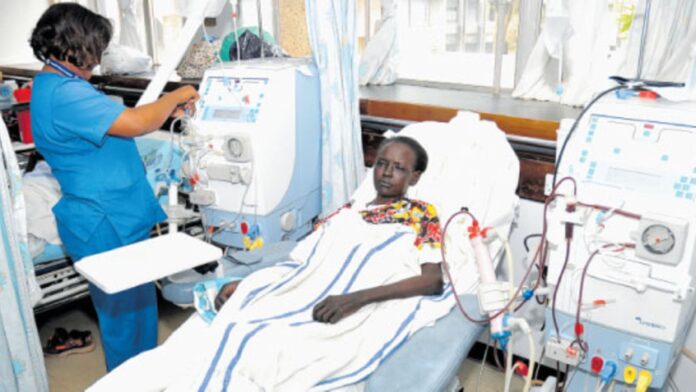
At 29, Kwame Mensah, a mechanic in Accra, expected his days to be measured by work, ambition and plans for marriage. Instead, his life is now counted in dialysis sessions. Several times a week, he sits beside a humming machine that performs the work his kidneys can no longer do, while his family searches desperately for money to finance the next treatment.
A 25-year-old Abena Owusu, a university of Ghana student, faces the same frightening calculation. Every hospital visit means transport expenses, laboratory tests, medication and income lost by the relative who accompanies her. Missing treatment, however, could cost far more than money.
Neither patient imagined that kidney failure could arrive so early—or so quietly. Their stories represent a crisis unfolding beyond Ghana’s dialysis wards: young lives threatened by undiagnosed hypertension, diabetes, contaminated environments, hazardous working conditions, unsafe medicines and a health system that often detects kidney damage when it is already severe.
For Kwame and Abena, the question is immediate: Who will pay for the next dialysis session? For Ghana, the deeper question is more troubling: Why are so many young kidneys failing before the country notices?
The deeper question
The kidneys do their work quietly. They filter waste, balance fluids, regulate blood pressure and help the body produce red blood cells. They can also lose most of their function quietly. By the time swollen feet, persistent vomiting, breathlessness or extreme weakness sends a young Ghanaian to hospital, the disease may already have reached the point where survival depends on dialysis or a transplant.
That silence is turning chronic kidney disease into one of Ghana’s most consequential but least visible health emergencies. Kidney specialists associated with the International Society of Nephrology have cited an estimated national prevalence of about 13.3 per cent—roughly one person in eight. Yet Ghana has no complete national renal registry capable of showing, in real time, how many people are living with kidney disease, how old they are, where they live, what caused their illness or how many abandon treatment because they cannot afford it.
This investigation finds that the crisis cannot be explained by “bad lifestyle” alone. Hypertension and diabetes remain major clinical drivers, but the risk landscape is wider: mercury and arsenic in mining communities; repeated dehydration among outdoor and industrial workers; unregulated herbal mixtures and misuse of painkillers; high-salt, highly processed diets; undiagnosed infections; and a health system that often discovers kidney damage late.
The central question is therefore not only why so many young kidneys are failing. It is why Ghana waits until they fail before acting.
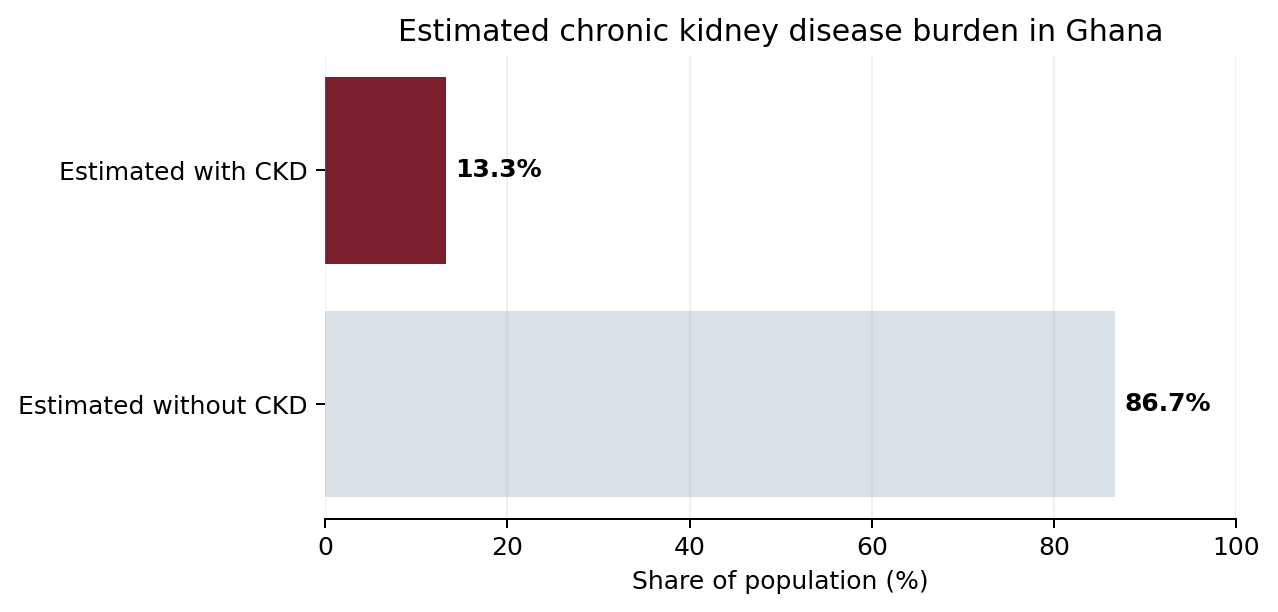
A widely cited estimate places chronic kidney disease prevalence in Ghana at 13.3 per cent. The estimate is not a substitute for a comprehensive national renal registry. Source: International Society of Nephrology kidney-care communication.
A disease that hides in plain sight
Chronic kidney disease is defined by abnormalities in kidney structure or function that persist for at least three months. Early disease may produce no obvious symptoms. A simple blood test for creatinine, used to estimate filtration, and a urine test for protein can identify risk long before a patient requires dialysis. But routine screening is not yet embedded across Ghana’s schools, workplaces, markets and primary-care system.
Young adults frequently feel healthy and may not check their blood pressure, blood sugar or kidney function. Hypertension can injure the kidneys; damaged kidneys can, in turn, worsen blood pressure. Diabetes damages the kidney’s filtering units over time. Obesity, smoking and cardiovascular disease compound the danger. When screening is delayed, the first diagnosis may arrive together with the devastating words “end-stage kidney disease.”
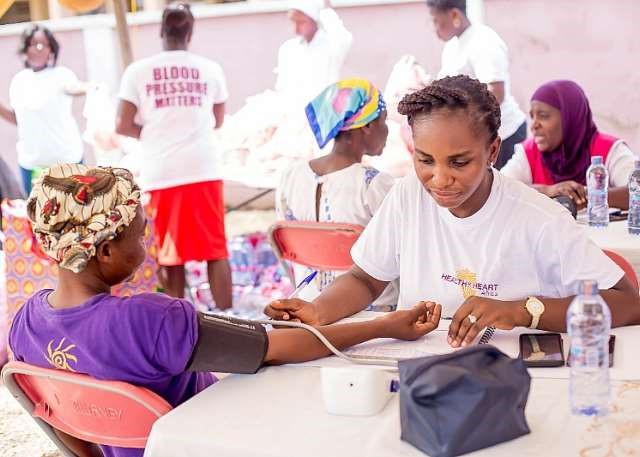
A community blood-pressure screening exercise in Ghana’s Ashanti Region. Early detection and control of hypertension can help reduce kidney damage.
“Kidney failure is often the final chapter of risks that accumulated unnoticed for years,” Dr. Israel Djokoto, a medical doctor at AMI Hospital in Accra with a 10-year experience has stated
The toxic geography of mining
The most disturbing evidence comes from Ghana’s artisanal and small-scale mining belt. A 2025 study by Pure Earth and Ghana’s Environmental Protection Authority analysed soil, water, crops and fish in six mining regions. Reuters reported that soil at Konongo Zongo contained average mercury concentrations of 56.4 parts per million against a cited safety threshold of 10 ppm. Peak readings reached 1,342 ppm—more than 130 times that threshold. Arsenic reached 10,060 ppm at some sampled locations.
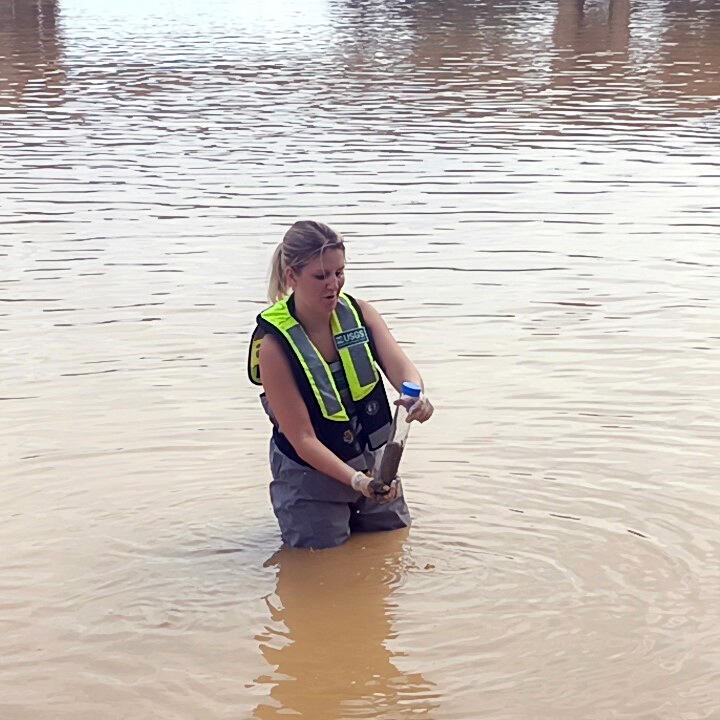
A United States Geological Survey chemist collects an Ankobra River sediment core for mercury analysis near Kukuavile, Ghana. Credit: U.S. Geological Survey.
The report warned that cumulative exposure to a mixture of toxic metals through ingestion, inhalation and skin contact constituted a serious health hazard. Dr Anthony Enimil of the Paediatric Society of Ghana disclosed in an interview that clinicians were seeing more children from mining areas with kidney disorders, including some requiring dialysis.
Heavy metals do not stop at the pit. Mercury used to bind gold can enter soil and waterways; arsenic can be mobilised through mining; contaminated dust can settle on food; and pollutants can move through fish and crops. Exposure does not prove that every kidney case in a mining district was caused by mining. But the combination of extreme environmental readings and clinical concern creates an urgent case for biomonitoring, kidney screening and transparent publication of community-level results.
Ghana’s response to galamsey has largely focused on water colour, forest loss and lost revenue. Kidney damage adds a slower and more intimate cost: the possible conversion of mineral wealth into lifelong illness for people who may never share in the proceeds.
Work that drains the body
Heat is another overlooked occupational risk. Farmers, construction workers, market porters, miners, welders, drivers, security personnel and factory workers can spend long hours in high temperatures with inadequate water, shade or rest. Recurrent dehydration reduces blood flow to the kidneys. Severe episodes can cause acute kidney injury; repeated injury may contribute to chronic damage, especially when combined with infection, painkiller use or existing hypertension.

A construction worker pauses in intense heat. Repeated dehydration and heat stress can place the kidneys under strain, particularly when combined with illness or unsafe medicine use.
The danger is likely to grow as temperatures rise. Yet occupational kidney protection rarely appears in workplace safety discussions. Employers may provide helmets and boots while ignoring drinking water, shaded recovery areas, heat-rest schedules and medical screening. Informal workers—who form a large part of Ghana’s labour force—often have no occupational-health service at all.
“A national response should treat water, rest and heat monitoring as health protections rather than privileges. Ghana also needs local research that tracks kidney function among workers in high-heat occupations instead of importing assumptions from other climates and populations,” Dr. Djokoto has posited.
What is on the plate and in the bottle
Urbanisation has changed what many young people eat and drink. Cheap meals can be heavy in salt; processed meats, instant noodles, seasoning cubes, salty snacks and fast foods are widely available; and sugar-sweetened drinks are aggressively marketed. High sodium intake raises blood pressure, while excess sugar and calories contribute to obesity and type 2 diabetes. The damage is cumulative and often begins years before symptoms.
Dietary messaging must, however, avoid blaming individuals while ignoring the food environment. Consumers cannot easily make informed choices when nutrition labels are confusing, restaurant meals disclose no sodium content and healthier alternatives cost more. Regulation, reformulation, clearer labelling and public procurement standards are as important as personal education.
Energy drinks and protein supplements are frequently accused of “causing kidney failure,” but responsible reporting requires precision. For most healthy people, an occasional regulated product is not proof of kidney injury. Risk may arise from excessive use, undisclosed ingredients, stimulant-related blood-pressure effects, dehydration, pre-existing disease or combining several products. Ghana needs surveillance and laboratory evidence, not social-media panic.
The medicine cabinet risk
Self-medication creates another pathway. Non-steroidal anti-inflammatory drugs—common painkillers used for headaches, menstrual pain, body aches and workplace injuries—can reduce blood flow to the kidneys, particularly when taken repeatedly, at high doses, during dehydration or by people with existing kidney disease. Because they are familiar and accessible, their risk is easily underestimated.
The same caution applies to herbal and traditional remedies. Ghana has a legitimate plant-medicine research tradition, and it would be inaccurate to declare all herbal products dangerous. The concern is with mixtures whose ingredients, concentrations, contaminants and interactions are unknown; products adulterated with pharmaceuticals or heavy metals; and the belief that “natural” automatically means safe.
Patients also sometimes use herbal mixtures after kidney disease has already begun. When their condition deteriorates, the product may be blamed even where the original disease was hypertension, diabetes or infection. Ghana needs toxicological testing, pharmacovigilance and honest clinical histories to distinguish cause, contribution and coincidence.
The infections and conditions left outside the lifestyle story
The public conversation often reduces kidney disease to sugar, salt, alcohol and herbal medicine. Those risks matter, but the explanation is incomplete. Severe malaria, sepsis, diarrhoeal disease and other infections can trigger acute kidney injury. HIV and some medicines used in long-term care require kidney monitoring. Sickle-cell disease can damage the kidney’s small blood vessels and filtering system. Autoimmune disease, congenital abnormalities and inherited conditions can affect people who have never consumed an energy drink or lived with obesity.
This matters because moralising language can delay care. A young patient who assumes kidney disease is a punishment for an unhealthy lifestyle may not recognise personal risk. Families may also blame patients for an illness produced by a mixture of biology, poverty, infection, toxic exposure and gaps in healthcare. Effective prevention begins with accurate explanations, not stigma.
The distinction between acute kidney injury and chronic kidney disease is also crucial. Acute injury can develop within hours or days after severe dehydration, infection, poisoning, blood loss or certain medicines. Some patients recover, while others are left with reduced function and a higher risk of chronic disease. Ghanaian hospitals need consistent systems for identifying acute injury, adjusting medicines, counselling patients and arranging follow-up kidney tests after discharge. A patient who survives the immediate emergency should not be lost until the next crisis.
A crisis without a complete count
The frequently cited prevalence estimate of 13.3 per cent is an alarm bell, not a census. Studies use different populations, laboratory definitions and geographical settings. Hospital records naturally overrepresent people who are already sick, while community studies can miss people without access to testing. Ghana therefore lacks the denominator needed for precise planning: how many residents at each stage of disease require monitoring, medicines, specialist care, dialysis or transplantation?
A national renal registry should do more than count patients sitting in dialysis chairs. It should connect laboratory, outpatient, inpatient, dialysis and transplant information while protecting privacy. It should identify the age at diagnosis, place of residence, occupation, suspected cause, comorbidities, treatment interruptions and outcome. Without those details, the country cannot test whether kidney disease is clustering around mining sites, agricultural zones, high-heat occupations or districts with poor access to primary care.
The absence of a complete count also weakens accountability. If a patient dies after repeatedly missing dialysis, was the cause recorded only as kidney failure, or was treatment unaffordability documented? If a child from a contaminated community develops kidney injury, does the health record connect the case to environmental surveillance? If hundreds of workers repeatedly present with dehydration, does anyone examine the workplace pattern? Data systems determine which stories become policy problems and which remain private tragedies.
The geography of treatment
Kidney disease is national, but specialist services are not evenly distributed. Patients outside major cities may travel for hours to reach dialysis, then make the same journey several times a week. Transport fares, accommodation, food and lost working time can rival the direct medical cost. A centre may technically exist within a region while remaining practically inaccessible to someone living at its farthest edge.
Distance also affects early care. A district facility that cannot process creatinine or urine albumin tests may refer a patient to a regional hospital. Each additional journey creates another opportunity for delay. Results may not move smoothly between facilities, and a patient who feels no pain may decide the expense is unnecessary. By the time symptoms become severe, the opportunity to slow progression may have narrowed.
Regional equity therefore requires more than purchasing dialysis machines. Machines need treated water, reliable electricity, trained nurses, nephrologists or specialist support, laboratory capacity, maintenance, consumables and emergency backup. Expanding a service without financing the full system can create a ribbon-cutting success followed by interruptions that endanger patients.
The economics of staying alive
Once the kidneys fail, the health crisis becomes a household financial crisis. Haemodialysis is commonly required several times a week. Beyond the treatment charge are laboratory tests, medicines, vascular access procedures, transport, special diets and income lost by patients and caregivers. Missing sessions because of cost can lead to fluid overload, dangerous electrolyte changes, hospitalisation and death.
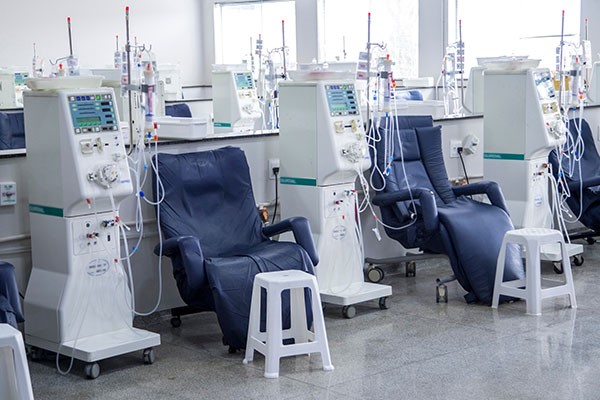
A haemodialysis unit prepared for patients. Dialysis expansion requires machines, treated water, reliable electricity, trained personnel, maintenance and a continuous supply of consumables.
The expansion of National Health Insurance support for dialysis is an important intervention, but financing treatment alone cannot be Ghana’s kidney strategy. Dialysis capacity is concentrated, transplant access is limited and prevention is far less expensive than lifelong renal replacement therapy. The country must also publish the number of eligible patients, sessions financed, centres participating, regional waiting times, interruptions in consumables and patient outcomes.
A policy that pays after kidneys fail but neglects screening, pollution control and occupational prevention would be treating the costliest end of the problem while leaving its causes untouched.
Following the risk chain
| Exposure or condition | Pathway to kidney harm | Accountability question |
| Hypertension and diabetes | Progressive damage to kidney blood vessels and filters | Why is annual kidney screening not routine for high-risk patients? |
| Mercury, arsenic and other metals | Toxic exposure through dust, water, food and work | Where are the public biomonitoring and community kidney-screening results? |
| Heat and recurrent dehydration | Acute kidney stress and repeated injury | Which employers enforce water, shade and rest protections? |
| Painkillers and unregulated remedies | Reduced kidney blood flow, toxicity or unknown contaminants | How strong are retail controls, warnings and adverse-event reporting? |
| High-salt and high-sugar diets | Hypertension, obesity and diabetes | Are food labelling and reformulation policies protecting consumers? |
| Late diagnosis | Disease progresses before treatment begins | Why are creatinine and urine-protein checks not widely available at primary level? |
The kidney crisis is produced by interacting medical, environmental, occupational and regulatory risks.
What Ghana must do now
A practical framework comes from Dr Joseph Vassalotti, Chief Medical Officer of the United States National Kidney Foundation and Clinical Professor at the Icahn School of Medicine at Mount Sinai. In published discussions of chronic kidney disease intervention, the American nephrologist emphasises paired blood and urine testing—estimated glomerular filtration rate and the urine albumin-to-creatinine ratio—followed by risk stratification, nutrition support and specialist services directed towards patients with the greatest severity.
Dr Vassalotti has also argued that much chronic kidney disease associated with diabetes and hypertension can be managed in primary care when clinicians understand kidney tests, blood-pressure control, medication adjustment, nutrition therapy and the point at which specialist referral becomes necessary. A two-year United States population-health intervention he described combined those measures and reported fewer hospitalisations and readmissions, with selected cost containment.
He was not commenting specifically on Ghana. However, applying his published clinical framework to the evidence uncovered in this investigation produces six priorities for Ghanaian authorities.
First, Ghana should establish a mandatory national renal registry covering public and private facilities. The registry should publish anonymised data on age, sex, district, suspected cause, disease stage, treatment, outcomes and the proportion of patients lost to care.
Second, kidney checks should be integrated into primary care and community outreach. Blood-pressure measurement, blood-sugar testing, serum creatinine and urine-protein tests should be prioritised for people with diabetes, hypertension, obesity, HIV, sickle-cell disease, a family history of kidney disease, recurrent infections or relevant toxic and occupational exposures.
Third, environmental enforcement must become health surveillance. Communities with documented mercury, arsenic, lead or cadmium contamination need repeated testing of water, soil and food, alongside voluntary human biomonitoring and kidney assessment. Results should be disclosed in language residents understand.
Fourth, Ghana needs occupational heat standards that specify potable water, shade, rest breaks, acclimatisation, emergency procedures and protection from retaliation when workers report symptoms. Informal workers require mobile screening and education tailored to their conditions.
Fifth, regulators and health professionals must strengthen warnings and surveillance around painkillers, unregistered supplements and herbal products without dismissing legitimate traditional medicine. Suspected kidney injuries should be reported, investigated and linked to laboratory testing.
Finally, prevention must be matched with fair access to treatment. Dialysis coverage should be transparent and reliable, regional centres should be strengthened, transplantation should be supported under ethical safeguards, and no patient should disappear from care simply because the family’s money has run out.
The strength of Dr Vassalotti’s model is that it does not treat every patient as if the risk were identical. Ghana can use simple tests to identify low, moderate and high-risk patients; support stable cases through trained primary-care teams; and reserve scarce nephrology capacity for people most likely to deteriorate. That approach would extend specialist expertise without pretending that every district can immediately employ a nephrologist.
The warning in a young patient’s chair
Every dialysis chair occupied by a young person represents more than an individual medical tragedy. It raises questions about the water that person drank, the dust inhaled, the heat endured, the medicines taken, the food environment encountered and the opportunities the health system missed to detect damage earlier.
Not every case can be prevented. Genetics, congenital conditions, autoimmune disease and severe infections will continue to cause kidney injury even in a stronger system. But Ghana can no longer describe the rising burden as silent while failing to listen to the warnings. The kidneys may fail quietly. Public policy should not.
Government’s response
The Government of Ghana says it recognises kidney failure as a serious public-health and financial burden and has begun expanding state support for dialysis treatment through the National Health Insurance Scheme.
In April 2025, the Chief Executive Officer of the National Health Insurance Authority, Dr Victor Bampoe, said the government intended to expand the free dialysis programme beyond the 20 participating centres and place it on a more sustainable financial footing.
“The previous government started the free dialysis, and there are 20 centres where the service is offered free of charge. What is needed is to expand it to make it more sustained in terms of funding,” Dr Bampoe said.
The NHIA had earlier announced that the nationwide programme would cover dialysis at the approved rate of GH¢491 per session. Its then chief executive, Dr Da-Costa Aboagye, estimated that supporting approximately 1,200 dialysis patients could cost the Authority between GH¢20 million and GH¢57 million annually.
The current NDC administration has also established the Ghana Medical Trust Fund—popularly known as MahamaCares—to mobilise sustainable financing for chronic illnesses, including kidney failure, cancer and cardiovascular disease.
However, the government’s public response has concentrated largely on financing dialysis after kidney failure occurs.