












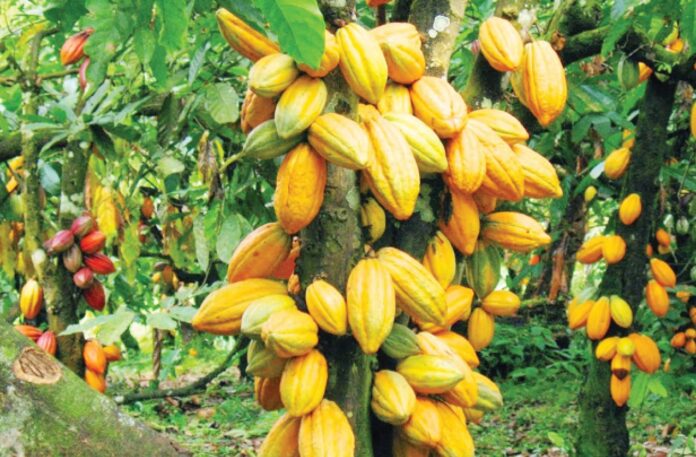

Ghana’s cocoa sector is caught between falling global prices, slowing growth and the prospect of another drop in production.
But beyond these immediate challenges lies a bigger question: how much value is Ghana losing by exporting too much of its cocoa in raw form?
This piece explores the underlying pressures on the sector and why local processing has become increasingly critical.
For years, cocoa has been a major source of export earnings for Ghana. But the latest developments are exposing the risks of depending heavily on a commodity whose prices and production levels can swing sharply.
International prices, which surged to about US$10,000 per metric tonne in early 2025, have since fallen sharply, trading between US$5,420 and US$5,447 as of Tuesday.
And the pressure is not coming from the market alone.
Ghana Statistical Service data show that cocoa-sector growth slowed to 5.2% in the second quarter of 2026, from 14.2% a year earlier.
This week, the Ghana Meteorological Agency warned that a very strong El Niño event could disrupt agriculture, water resources and hydroelectric power generation during the 2026/2027 period.
This does not bode well for the sector.
COCOBOD is also projecting at least a 16% drop in production in the 2026/2027 crop season, with weather conditions, swollen shoot disease, ageing farms and illegal mining threatening output.
These developments make the push to process more cocoa locally even more urgent.
Ghana has set a target of processing at least half of its cocoa domestically, supported by installed grinding capacity of more than 500,000 metric tonnes.
There are already signs of what value addition can deliver. Non-traditional exports reached a record US$5 billion in 2025, with processed and semi-processed products accounting for US$3.9 billion.
But the gap remains significant.
Less than 10% of Ghana’s raw cashew is processed locally, underscoring the wider challenge of building a competitive agro-processing industry.
The real test, therefore, is whether Ghana can turn its agricultural output into more finished products, stronger export earnings and jobs at home, rather than remain exposed to the price swings of raw commodities.
CNR