











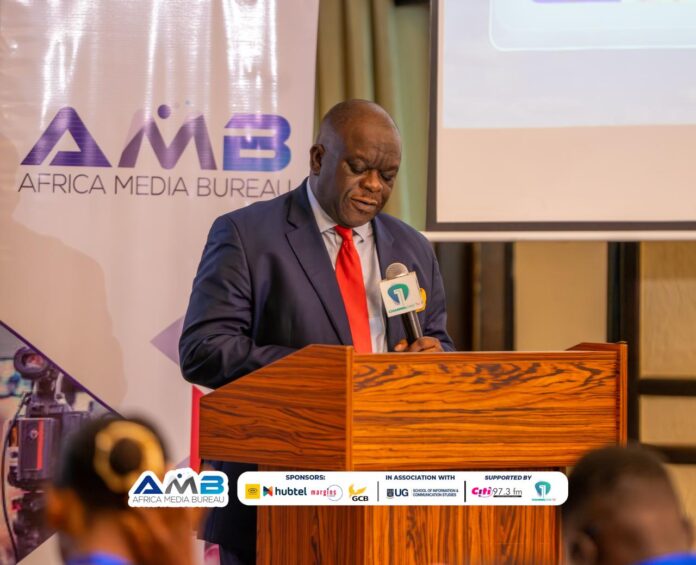

African media organisations are struggling to survive as declining revenues and limited institutional funding threaten the continent’s ability to control its own narrative, Chief Executive of ABN Holdings, George Twumasi, has warned.
Speaking at the Media Convergence in Ghana conference organised by the Africa Media Bureau on Wednesday, April 29, 2026, Twumasi delivered a stark assessment of the industry, arguing that the financial fragility of media institutions is eroding what he described as “narrative sovereignty.”
“However, with traditional ad revenues declining, and with most of Africa’s national media entities fighting to survive… our narrative sovereignty remains compromised,” he said.
He pointed out that many media organisations are increasingly relying on sponsored content and event-based monetisation to stay afloat, cautioning that this trend risks weakening editorial independence and undermining public interest journalism.
Twumasi attributed the situation to a broader structural gap, criticising major African financial institutions for failing to prioritise investment in the media sector.
“The African Development Bank, the African Exim Bank do not prioritise media,” he said, calling for the establishment of dedicated institutional funding mechanisms to sustain the industry.
He further highlighted persistent infrastructure deficits—including unreliable electricity in rural areas and the high cost of data—as major barriers limiting access to information for millions across the continent.
Twumasi also identified a shortage of digitally skilled journalists, outdated policy frameworks and concerns over censorship in some countries as additional pressures weighing down the sector.
Despite these challenges, he insisted that a converged African media ecosystem—uniting state-owned and private platforms—can play a transformative role in shaping the continent’s future.
He described such a system as an “electronic classroom,” capable of bridging the gap between rural and urban populations while fostering a more informed citizenry.
Drawing comparisons, Twumasi pointed to Ghana’s media growth following reforms in the early 2000s, noting that a vibrant press has strengthened democratic accountability. In contrast, he said media systems in parts of Africa remain either fragmented opposition tools or instruments of propaganda.
citinewsroom