











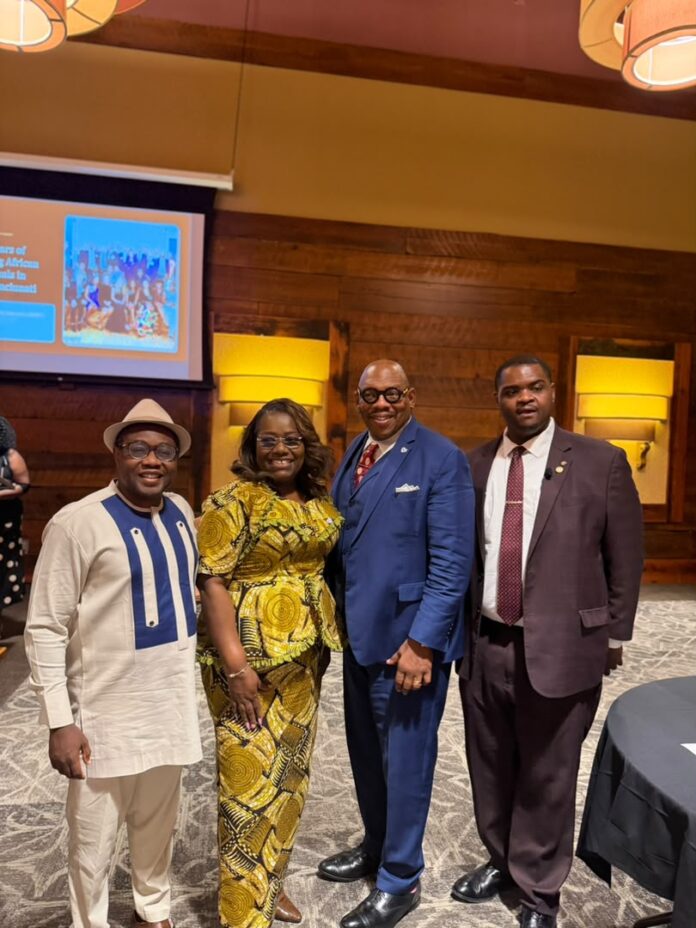

Ghana is formally pivoting its foreign and economic policy away from traditional aid dependency toward a model of “development sovereignty,” a profound shift articulated by Deputy Chief of Staff Nana Oye Bampoe Addo during a major address in the United States this week.
The policy, spearheaded by President John Dramani Mahama and initiated with former Nigerian President Olusegun Obasanjo, is known as the “Accra Reset.” At its core, it rests on a single, powerful principle: “that Africa must move from development dependency to development sovereignty, leading its own priorities, financing its own systems, and negotiating from strength.”
According to Bampoe Addo, the sharp decline in official development assistance (ODA) in real terms has been a “blessing in disguise,” forcing Ghana to prioritize its own development and negotiate trade on its own terms. “The Accra Reset does not reject cooperation; it changes the terms on which cooperation happens,” she explained.
This new posture is being operationalized through several key strategic moves. Domestically, the government is implementing a “24-Hour Economy” to maximize productivity and attract investment. On the continental stage, Ghana is preparing to assume the Chairmanship of the African Union in January 2027, where President Mahama has pledged to champion continental integration and accelerate the implementation of the African Continental Free Trade Area (AfCFTA).
The policy also includes a more assertive stance on managing natural resources, exemplified by the new Ghana Gold Board Act, which centralizes gold exports to curb smuggling and retain foreign exchange within the formal economy. For political observers, the “Accra Reset” is more than a slogan; it is a coherent and ambitious doctrine aimed at redefining Ghana’s place in the world. It signals a future where Ghana engages with global powers like the United States not as a recipient, but as a strategic partner with its own clear agenda and terms of engagement.