













C-NERGY Global Holdings is advocating the creation of a Coastal Tourism Authority to coordinate planning, attract investment, protect ecosystems, improve infrastructure, and develop tourism zones, arguing it could unlock Ghana’s vast beach tourism potential and drive economic growth.
For many decades, experts have bemoaned that Ghana’s coastline remains one of its most underutilized economic assets.
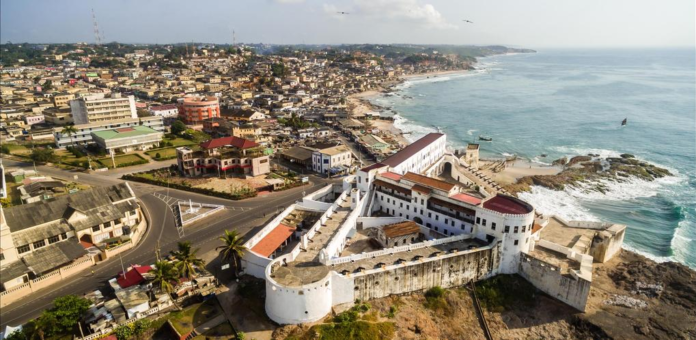
Stretching more than 500 kilometers from Aflao in the east to Half Assini in the west, the country possesses sandy beaches, lagoons, fishing communities, historic forts and castles, and some of the most attractive oceanfront landscapes in West Africa. However, despite this natural advantage, Ghana has not developed a beach tourism industry capable of competing with destinations in the Mediterranean, Caribbean, or even parts of East Africa.
According to C-NERGY Global Holdings, one of the key reasons for this missed opportunity is the absence of a single institution dedicated exclusively to planning, regulating, and driving the development of coastal tourism.
In its latest Thought-Leadership Series on beach tourism development, the policy think tank is calling for the establishment of a Coastal Tourism Authority, describing it as a potentially transformative intervention that could unlock billions of dollars in tourism investment and reposition Ghana as a premier beach tourism destination in Africa.

The Missing Institution
Ghana’s coastal assets currently fall under multiple agencies and ministries, creating overlaps, bureaucratic delays, fragmented planning, and inconsistent enforcement of environmental standards. As a result, investors often face uncertainty regarding land acquisition, permits, environmental regulations, infrastructure provision, and long-term development plans.
However, the proposed Coastal Tourism Authority would serve as a central coordinating body responsible for land-use planning, environmental protection, investor licensing, tourism infrastructure coordination, and long-term coastal development strategy.
According to the think tank, such an institution would provide the clarity and predictability investors need before committing millions of dollars to large-scale tourism projects.
To put it simply, such an authority would function as a one-stop agency capable of bringing together tourism authorities, local governments, environmental regulators, infrastructure providers, and private investors under a unified vision for coastal development.
Beyond establishing a dedicated authority, C-NERGY is proposing a number of measures that could transform the country’s beaches into a tourism hub in Africa and can attract visitors across the world.
Creating Tourism Growth Corridors
These include the Western Riviera, the Central Heritage Coast, and the Eastern Lagoon Coast. The concept is to transform these areas into internationally recognized tourism corridors featuring beachfront resorts, marinas, promenades, beach parks, entertainment facilities, and hospitality services.
Such developments, according to C-NERGY, could significantly increase visitor spending, extend tourist stays, and create thousands of jobs in local communities.
Rather than relying solely on historic attractions and cultural festivals, Ghana would be able to offer complete beach holiday experiences capable of attracting visitors throughout the year.

Attracting Global Investors
C-NERGY also recommends the introduction of special tourism investment zones and targeted tax incentives to attract international hotel chains and tourism developers. Global hospitality brands often seek locations where planning regulations are clear, infrastructure is reliable, and long-term government commitment is evident.
The think tank believes that a dedicated Coastal Tourism Authority could help provide this assurance by serving as a stable institutional anchor for investors.
This, it argues, could help Ghana attract the kind of large-scale investments that have transformed coastal economies elsewhere in the world.
Infrastructure as the Foundation
No tourism destination succeeds without infrastructure, C-NERGY says. Recognizing this reality, it is urging significant investment in regional airports, coastal highways, cruise ship terminals, sanitation systems, reliable electricity supply, clean water infrastructure, and modern waste management facilities.
For many visitors, the quality of infrastructure often shapes their perception of a destination as much as the attraction itself.
The organization maintains that improving connectivity between coastal communities and major urban centers could unlock entirely new tourism markets while making existing destinations more attractive to both domestic and international travelers.
Protecting the Asset
Importantly, C-NERGY stresses that beach tourism development cannot come at the expense of environmental sustainability. The think tank is calling for stronger protection of beaches and marine ecosystems, emphasizing that beach cleanliness, water quality, and erosion control are fundamental to the long-term success of any coastal tourism strategy.
A polluted beach or degraded coastline, it notes, can quickly damage a destination’s reputation and discourage repeat visits.
The proposed authority would therefore play a critical role in ensuring that economic development and environmental conservation move hand in hand.

Addressing Public Access
Another recommendation focuses on the regulation of private beaches and entry fees charged at public beaches. C-NERGY argues that clearer rules are needed to balance investor interests with public access rights.
The objective is to create a system that encourages private investment while ensuring that Ghana’s coastline remains accessible and beneficial to citizens and local communities.
The Bottomline
C-NERGY believes that with proper governance, coordinated planning, investor-friendly policies, and sustainable environmental management, beach tourism could emerge as one of Ghana’s most important growth sectors.
The establishment of a Coastal Tourism Authority, the organization argues, could become the institutional catalyst that finally unlocks this potential. If implemented effectively, the authority would not merely oversee tourism development.
It could become the engine that turns Ghana’s vast coastline into a globally competitive tourism destination, creating jobs, attracting investment, generating foreign exchange, and bringing new economic opportunities to coastal communities across the country.
thehighstreetjournal