









The Public Interest and Accountability Committee (PIAC) has taken a decisive legal step by referring the Ghana National Petroleum Corporation (GNPC) and its exploration subsidiary, Explorco, to the Office of the Attorney-General. This escalation comes after the state-owned entities repeatedly ignored directives to account for and remit over US$561 million in petroleum revenues to the state.
According to PIAC’s latest oversight report, Explorco failed to account for a staggering US$561,648,785.37 in petroleum lifting proceeds generated between 2022 and 2024. Despite numerous formal recommendations and directives issued by the committee over that period, GNPC and Explorco have remained non-compliant.
The Legal Battleground: PRMA vs. Corporate Status At the heart of the controversy is a critical legal question regarding the status of GNPC’s commercial subsidiaries. Explorco, which took over the operations of its predecessor company, JOHL, lifts petroleum on behalf of GNPC. The central dispute is whether Explorco can legally retain these proceeds outside the state’s revenue architecture simply by virtue of being a commercial entity registered under the Companies Act, or if the funds inherently belong to the Ghanaian public.
PIAC has firmly invoked Section 3 of the Petroleum Revenue Management Act (PRMA, Act 815) to settle the argument. The law is unambiguous: it states that all petroleum revenue due to the Republic, derived from whatever source, must be assessed, collected, and accounted for by the Ghana Revenue Authority (GRA).
Furthermore, the PRMA mandates that these revenues “shall be paid by direct transfer into the Petroleum Holding Fund (PHF),” an entity specifically established to receive and disburse petroleum revenues due to the state.
A Dangerous Precedent PIAC insists that because GNPC is a state-owned entity and Explorco acts as its lifting arm, the proceeds from these liftings undeniably belong to the state. The committee warns that allowing GNPC to bypass the PHF sets a deeply dangerous precedent for the country’s entire petroleum governance framework, threatening the very credibility and integrity of how Ghana manages its natural resources.
Exhausted Oversight Channels Before approaching the Attorney-General, PIAC had exhausted its standard oversight mechanisms. The committee noted that its consistent stance on the issue—highlighted in both annual and semi-annual reports—failed to trigger any corrective action from GNPC.
Consequently, PIAC elevated the matter to Parliament’s Select Committee on Finance during deliberations on its latest report. However, with the funds still unremitted, the committee found it necessary to invoke legal intervention through the AG.
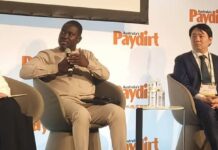
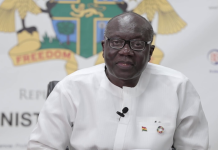
Eroding Public Trust Chairman of PIAC, Richard Kojo Ellimah, issued a stark warning regarding the implications of GNPC’s defiance. He emphasized that the national oil company exists to steward resources on behalf of the public. If this attitude of non-compliance continues, Ellimah cautioned, it will severely erode public trust in GNPC—an outcome he described as disastrous for the nation’s economic health and the future of its oil and gas sector.