











Mahama, Asantehene and AU Commissioner tout value addition for economic stability
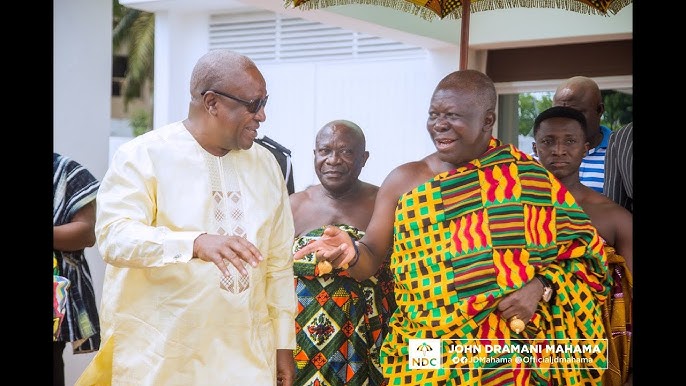
Ghana’s GoldBod model took centre stage at the Mining in Motion Conference, with President John Dramani Mahama, the Asantehene, Otumfuo Osei Tutu II, and an African Union (AU) Commissioner calling for greater local value addition to mineral resources to strengthen African economies.
The speakers highlighted Ghana’s efforts to expand local gold assaying, refining and trading as a potential model for African countries seeking to retain more economic value from their natural resources, strengthen foreign exchange reserves and promote currency stability.
Speaking at the conference on Monday, October 19, President Mahama said Ghana was pursuing policies to increase domestic participation in the gold value chain rather than relying predominantly on the extraction and export of raw minerals.
He explained that the government, through GoldBod and its gold refining policy, was working to retain more of the economic benefits generated by the country’s gold resources.
“Through the Ghana Gold Board and our gold refining policy, we are working to retain more value through assaying, refining, and related services,” he said.
The initiative is expected to expand Ghana’s capacity to test and refine gold locally while creating opportunities for domestic businesses and professionals in the mining and mineral processing industries.
African Union Commissioner for Economic Development, Trade, Tourism, Industry and Minerals, Francisca Tatchououp Belobe, also identified GoldBod as a model that other African countries could consider in reforming their mineral sectors.
She said Ghana’s approach demonstrated how mineral sector reforms could contribute to broader national development objectives by improving foreign exchange management, strengthening international reserves and supporting currency stability.
Ms Belobe commended President Mahama for the initiative, noting that Ghana’s emphasis on local content, domestic enterprises and mineral value addition offered important lessons for the continent.
She further expressed the AU’s interest in sharing the lessons from Ghana’s experience with other African countries to support efforts towards stronger and more resilient economies.
The commissioner’s endorsement comes as GoldBod continues to play a role in Ghana’s foreign exchange market through its artisanal and small-scale mining (ASM) gold trading operations.
In September 2026, GoldBod reported generating US1.4 billion.
According to the Board, the proceeds were channelled through authorised commercial banks and the Bank of Ghana to support foreign exchange market stability and reserve accumulation.
Meanwhile, the Asantehene, Otumfuo Osei Tutu II, has endorsed President Mahama’s reset agenda, describing the government’s focus on domestic mineral processing and value addition as a necessary step towards economic transformation.
Speaking on behalf of the Asantehene at the conference, the Essumejahene, Nana Okyere Kusi Ntrama, said Ghana’s mineral policy direction could help break the cycle of poverty by ensuring that the country derived greater benefits from its natural resources.
He noted that the government’s emphasis on processing minerals locally, rather than exporting them in their raw state, reflected a longstanding national aspiration to use mineral wealth to drive industrial development.
Nana Okyere Kusi Ntrama said the agenda remained relevant despite controversies surrounding GoldBod, adding that the current approach recalled Ghana’s early post-independence ambitions to harness its mineral resources for national development.
“Regardless of the controversies surrounding the Gold Board, there should be no doubt that the nature of the President’s reset agenda takes us right back to the very foundation of our republic, when Dr. Kwame Nkrumah sought to harness our minerals and move to establish a gold refinery in Tarkwa,” he said.
He added that Ghana had an opportunity to build on that legacy by strengthening domestic processing capacity and ensuring that more of the value generated from its mineral resources remained within the country.
thenewrepublicgh