













…Over Ghana’s PCI Readiness
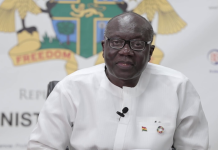
Ghana’s transition from an International Monetary Fund (IMF) Extended Credit Facility (ECF)—which involved a $3 billion loan with strict conditions—to a Policy Coordination Instrument (PCI) is a major milestone will take the center stage when finance minister Dr Cassiel Ato Forson meets IMF board in Bangkok, Thailand this week.
This meeting will signal whether Ghana that has recovered enough to no longer need bailout funds, but still wants the IMF’s supervision to stay on track.
The meeting comes after Ghana completed the final review of its Extended Credit Facility arrangement in July 2026 and moved towards a 36-month Policy Coordination Instrument (PCI), a non-financing IMF programme.
The PCI is an IMF tool designed for countries that do not need immediate financial assistance but still want the IMF to monitor, endorse, and coordinate their economic policies.
The key features of this programme, unlike the ECF, the PCI does not disburse any money. Ghana will not receive cash from the IMF under this arrangement.
Ghana government will voluntarily submit its economic policies (budgets, tax plans, monetary policy) to the IMF for review.
The IMF may conduct reviews every six months to ensure the government is sticking to its agreed economic targets.
This will act as a powerful signal to international investors and creditors that Ghana’s economic policies remain sound and IMF-approved.
Transitioning to a PCI is highly beneficial for Ghana at this stage of its economic recovery.
Restoration of Credibility and Investor Confidence – When Ghana defaulted on its debt in 2022, it lost the trust of international investors. Completing the ECF and moving to a PCI acts as a “Good Housekeeping Seal of Approval.” It tells foreign investors, Eurobond holders, and multilateral lenders that Ghana’s economy is stable again, making it safer and cheaper for the country to borrow on international markets in the future.
Policy Discipline – Historically, one of Ghana’s biggest economic weaknesses has been policy slippage—abandoning fiscal discipline, especially around election years. The PCI acts as an external disciplinarian. Knowing that the IMF will be conducting reviews every six months makes it politically painful for the government to engage in reckless spending or excessive borrowing, keeping the economy on a sustainable path.
Support for Ongoing Debt Restructuring – Ghana is still finalizing the restructuring of its Eurobond debt with private creditors. The PCI is crucial here. Private creditors are much more likely to agree to favorable restructuring terms if they know the IMF is still closely monitoring Ghana’s finances. It assures them that the government won’t mismanage the economy after the debt deal is struck.
A Stepping Stone to Full Market Access – Ghana is not yet ready to issue Eurobonds at affordable interest rates. The PCI provides a transitional “bridge.” It allows Ghana to build a track record of good governance without the pressure of repaying an IMF loan, gradually bringing down the risk premium (yield) investors will demand when Ghana eventually returns to the international bond market.
Less Austerity, More Flexibility – Because the PCI doesn’t involve IMF cash, the conditionality (strict rules) is generally lighter than under the ECF. The government has more room to pursue growth-oriented policies—like infrastructure spending or social interventions—as long as they remain within the broad fiscal boundaries agreed upon with the Fund.
While the PCI is overwhelmingly positive, there are a few realities Ghana must manage:
No Financial Safety Net: If Ghana faces an unexpected shock (e.g., a sudden drop in gold/cocoa prices, a global financial crisis, or a severe drought), the PCI will not provide emergency cash. Ghana must rely on its own foreign exchange reserves.
Shadow Conditionality: Even though there is no money changing hands, the IMF still expects the government to meet certain targets (like revenue collection and deficit limits). If the government fails a PCI review, the reputational damage would be severe, potentially triggering a loss of market confidence.
Domestic Political Pressure: Being under the PCI means the government cannot easily abandon unpopular but necessary policies (like the VAT hike or trimming electricity subsidies). This could become a political headache, especially as the next election cycle approaches.
For Ghana, moving to the PCI is like a patient being discharged from the hospital (ECF bailout) but keeping a doctor’s appointment every six months to ensure they don’t relapse.
It is very good for Ghana because it restores international credibility, enforces much-needed fiscal discipline, and supports the final stages of debt restructuring, all without the strict austerity of a bailout program. However, the government must remain vigilant; the PCI is a tool for stability, not a cure-all, and Ghana must continue to rely on its own revenue generation and prudent spending to fully recover.