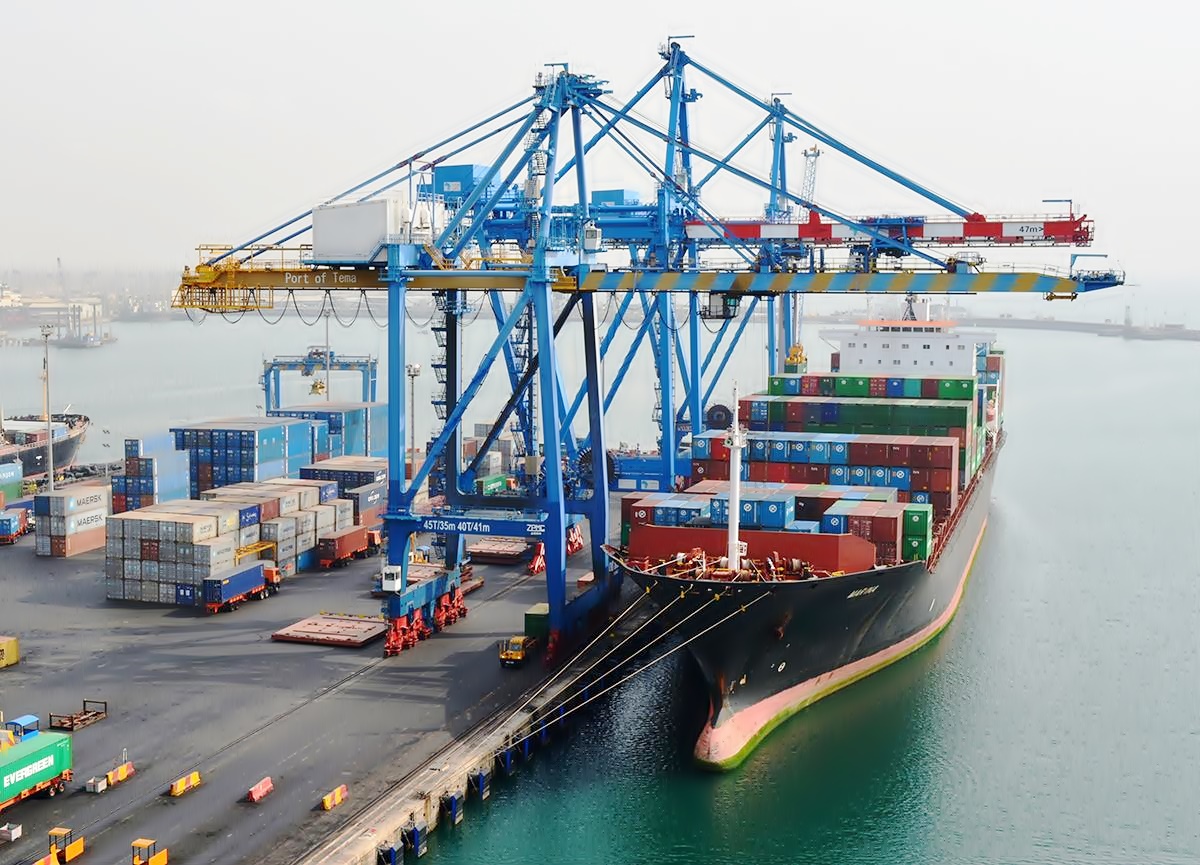












Ghana’s economy growing by about six per cent is, without doubt, welcome news.
After years of economic turbulence, a debt crisis, high inflation, exchange-rate instability and painful fiscal adjustments, an economy expanding at this pace provides reason for cautious optimism.
But it would be premature to declare victory.
For the ordinary Ghanaian, the most important question is not whether the economy has grown by six per cent. The real question is: What does that growth mean for the household, the worker, the farmer, the trader and the young person looking for a job?
That is where the conversation must now move.
A six per cent growth rate is strong by international standards. It is also comfortably above Ghana’s population growth rate, meaning that, in broad terms, economic output per person is increasing.
This is particularly significant after the economic difficulties of recent years. Ghana has emerged from an exceptionally difficult period of debt distress and has undertaken painful fiscal and debt-restructuring measures under the International Monetary Fund programme.
Therefore, stronger growth suggests that the economy is beginning to regain momentum.
But economic growth, by itself, does not put food on the table.
THE QUALITY OF GROWTH MATTERS
The composition of the six per cent growth is perhaps more important than the headline figure itself.
According to Government Statistician Alhassan Iddrisu, the second-quarter expansion was driven significantly by the communication sector. Information, communication and technology recorded growth of 30.9 per cent, up from 21.3 per cent in the corresponding period a year earlier, and accounted for 41.5 per cent of overall growth in the quarter.
That is impressive.
But it also raises an important question: How many sustainable jobs does this kind of growth create for the millions of Ghanaians who need employment?
A country can record spectacular growth in telecommunications, financial services, mining or oil and still have large numbers of young people struggling to find decent work.
This is why Ghana must look beyond GDP.
Growth driven by sectors with limited employment linkages may increase national output without substantially improving household incomes. Growth in agriculture, agro-processing, manufacturing, construction and other labour-intensive sectors, on the other hand, can have a much more direct impact on livelihoods.
The objective must therefore be growth that creates jobs, raises incomes and expands productive opportunities.
THE INFLATION QUESTION
There is, however, one major reason Ghanaians should view the latest growth figures with cautious optimism rather than unrestrained celebration.
That is the cost of living.
Consumer inflation has fallen dramatically from the extraordinary levels recorded during the debt crisis. The decline from 54.1 per cent in December 2022 to around five per cent recently is a major achievement and deserves recognition.
But lower inflation does not mean that prices have returned to their previous levels.
It simply means that prices are rising much more slowly.
This distinction is crucial.
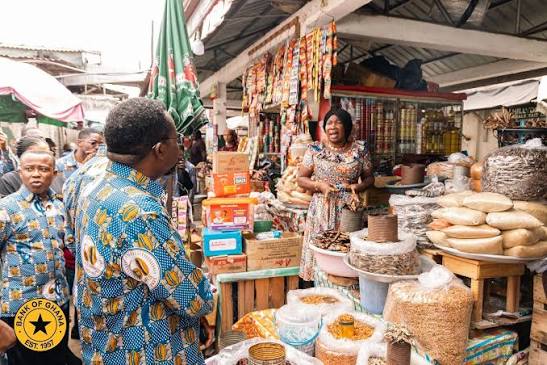
The Ghanaian who used to spend GH¢500 on a basket of essential goods and now spends substantially more will not necessarily feel better simply because the inflation rate has fallen.
What matters to households is purchasing power.
If incomes do not rise alongside the cumulative increase in prices, the average worker can continue to feel financially squeezed even when inflation has fallen sharply.
Therefore, the next phase of economic management must be about converting macroeconomic stability into improved real incomes.
THE CEDI MUST ALSO HOLD
The same principle applies to the exchange rate.
A stable cedi is not merely a matter for economists, bankers and policymakers.
It affects the price of fuel, medicines, machinery, food imports, school fees, rent and virtually every aspect of economic life.
Recent improvements in the macroeconomic environment provide an opportunity to consolidate exchange-rate stability.
But this cannot be achieved through short-term measures alone.
Ghana must continue to increase its export capacity, reduce unnecessary dependence on imports, strengthen domestic production and build foreign-exchange reserves.
A growing economy that continually requires large quantities of foreign exchange to finance imports remains vulnerable.
THE DEBT BURDEN REMAINS
There is another uncomfortable reality.
Ghana’s debt crisis did not disappear simply because economic growth has returned.
The country has undertaken a significant restructuring of its debt, and the fiscal adjustment has imposed considerable costs on citizens.
Debt sustainability must therefore remain at the centre of economic policy.
Every cedi committed to debt servicing is a cedi that cannot simultaneously be used for a school, hospital, road, water project or social intervention.
Growth should help improve government revenues and debt sustainability. But government must resist the temptation to interpret higher revenues as permission for another cycle of excessive borrowing and spending.
Ghana has been down that road before.
We cannot afford to return.
FROM MACROECONOMIC RECOVERY TO HOUSEHOLD RECOVERY
This is ultimately the distinction between macroeconomic recovery and household recovery.
The macroeconomic indicators may be improving: growth is stronger, inflation is lower and the economy is showing signs of renewed activity.
These are important achievements.
But the success of economic policy must ultimately be measured in the lives of citizens.
Are more young people getting jobs?
Are businesses expanding?
Are farmers earning better incomes?
Can households afford nutritious food?
Are transport costs becoming manageable?
Can parents pay school fees without borrowing?
Can the average worker save after paying rent, food, utilities and transportation?
Those are the indicators that will determine whether the recovery is real in the eyes of the public.
SIX PER CENT MUST BE THE BEGINNING, NOT THE DESTINATION
The six per cent growth figure should therefore neither be dismissed nor exaggerated.
It is good news.
It signals that Ghana’s economic engine is recovering after a difficult period.
But it is not a blank cheque for government to declare the economic crisis over.
Nor should critics dismiss the figure simply because many households are still struggling.
Both positions miss the point.
The appropriate response is cautious optimism accompanied by greater scrutiny.
Government must now ensure that growth becomes broader, deeper and more inclusive.
The private sector must be enabled to invest and create jobs. Agriculture and manufacturing must receive greater attention. Infrastructure must support production rather than merely consumption. Fiscal discipline must be maintained. Debt must remain sustainable. And the gains from lower inflation and exchange-rate stability must eventually translate into stronger household purchasing power.
The ultimate test of Ghana’s recovery will not be the GDP growth rate announced at a press conference.
It will be whether the Ghanaian worker can look at the contents of the market basket, the balance in the bank account and the prospects for the future and confidently say:
“Life is getting better.”
Until that happens, six per cent growth should be welcomed—but with our eyes firmly on the bigger picture.
By Isaac Addo