













Ghanaian mothers sustain households through vast unpaid care work, yet this invisible labour remains economically uncounted, deepening inequality while quietly supporting families and national productivity.
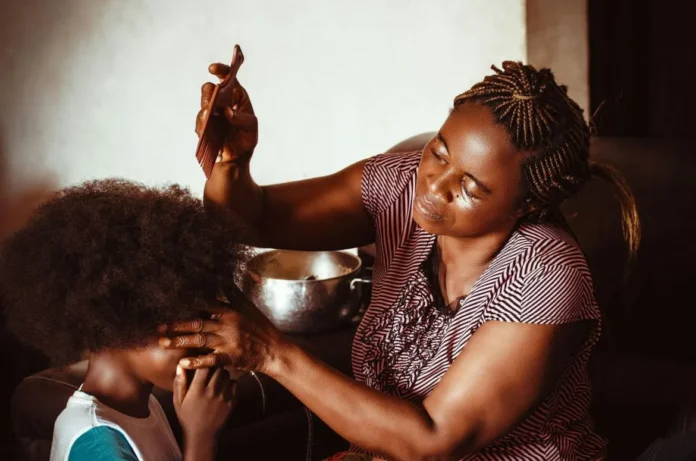
At 4:30 every morning, before the first trotro horns cut through the darkness in Accra, thousands of Ghanaian mothers are already awake. Some are boiling water for baths before preparing children for school. Others are arranging tomatoes into pans for the market, replying to customers on WhatsApp, packing waakye for sale, or calculating how to stretch the last GH¢200 until the month’s end. By sunrise, many have already completed hours of labour that will never appear on a payslip, never attract pension contributions, and never be counted in Ghana’s Gross Domestic Product.
Yet economists, gender experts, and labour institutions increasingly argue that this invisible work is one of the most important forces sustaining households and economies worldwide.

As Ghana joins the rest of the world to celebrate Mother’s Day, attention is once again turning to the hidden economic burden carried by women whose unpaid domestic and caregiving labour quietly holds families, workplaces, and entire societies together.
The International Labour Organisation estimates that 708 million women worldwide are outside the labour force due to unpaid care responsibilities, compared with 40 million men. The organisation describes care responsibilities as one of the biggest barriers preventing women from entering, remaining, and progressing in paid employment.
“Women shoulder a disproportionate share of care responsibilities,” the ILO said in a 2024 report on the care economy, warning that societal expectations around caregiving continue to deepen economic inequality between men and women.
In Ghana, the imbalance is equally stark. According to findings referenced by the Ghana News Agency from the 2020 Ghana Time Use Survey conducted by the Ghana Statistical Service, women spend an average of 6.4 hours daily on unpaid care and domestic work compared to 1.7 hours spent by men. The report also found that women perform more than 76 per cent of unpaid care work nationwide.
The tasks themselves often appear ordinary and therefore economically invisible. Cooking. Cleaning. Childcare. Caring for sick relatives. Fetching water. Managing household budgets. Emotional support. Yet experts argue these activities form the foundation upon which every formal economy operates.
“Care work is the backbone of our well-being and prosperity. Without it, our societies and economies would simply not function,” Executive Director of UN Women, Sima Bahous, said during the 2024 International Day of Care and Support observance at the United Nations on October 29, 2024, where she stressed that unpaid care work remains foundational to the functioning of households, societies, and the global economy. Bahous further noted that if unpaid care and domestic work were valued at minimum wage, it would account for nearly 9 per cent of global GDP, equivalent to approximately $10.8 trillion annually. She also highlighted the persistent gender imbalance in caregiving, observing that women worldwide perform nearly three times more unpaid care and domestic work than men, a disparity that mirrors patterns increasingly documented in Ghana.
For many Ghanaian mothers, the challenge is not simply caregiving, but balancing unpaid domestic responsibilities with rising living costs, unstable incomes, and economic uncertainty.

At Makola Market, many women now combine trading with full-time caregiving responsibilities. Some leave home before dawn to secure customers early enough to return home and supervise children after school. Others carry babies on their backs while selling vegetables, smoked fish, or second-hand clothing under the scorching afternoon heat.
In many households, mothers are increasingly becoming economic shock absorbers as inflation and high food prices continue to pressure family budgets. Several women have turned kitchens into businesses, selling food online, baking pastries at night, or operating small side businesses to supplement household income.
Economists say this unpaid labour effectively subsidises the economy because it reduces the cost of social reproduction for governments and employers. Without mothers providing childcare, elder care, cooking, and household management at no cost, the economic burden on both public institutions and private households would be significantly higher.
The International Labour Organisation notes that unpaid care work globally amounts to billions of hours annually and plays a central role in maintaining productivity and workforce stability.
UN Women further states that women perform more than three-quarters of unpaid care and domestic work globally and warns that the burden limits women’s economic opportunities, financial independence, and career advancement.

The consequences are often long-term. Many mothers sacrifice career progression, educational opportunities, rest, and even health to sustain households. Others operate in a cycle where paid work only begins after unpaid labour at home has already consumed several hours of the day.
Labour analysts argue that Ghana’s economy cannot have serious conversations about productivity, workforce participation, or economic inclusion without addressing the unequal burden of unpaid care work that women play.
The issue is also beginning to gain policy attention globally. In June 2024, the International Labour Conference adopted a landmark resolution on decent work and the care economy, calling for stronger investments in childcare systems, social protection, parental leave policies, and care infrastructure.

For many Ghanaian mothers, however, the debate remains deeply personal rather than political.
Across homes, markets, offices, farms, and roadside stalls, millions continue to carry the invisible labour that keeps families alive often with little recognition beyond a yearly celebration.
This Mother’s Day, beneath the flowers, social media tributes, and church dedications lies a difficult national question. If Ghana’s economy depends so heavily on the unpaid labour of mothers, how long can the country afford to treat that labour as invisible?
thehighstreetjournal